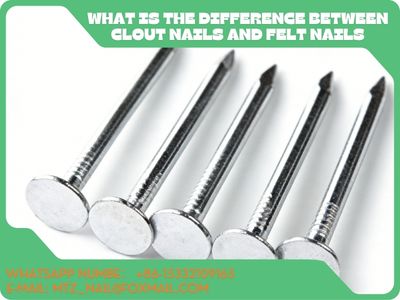
What is the difference between clout nails and felt nails?
When sourcing fasteners for roofing or construction projects, many buyers assume that clout nails and felt nails are interchangeable. But in reality, using the wrong one can quickly lead to failure on-site. While these two fasteners may look similar due to their wide heads, they are designed for very different applications. Choosing the wrong type can lead to material failure, reduced durability, and even costly rework.
In practical construction and roofing environments, clout nails are widely used for structural or semi-structural fixing, while felt nails are mainly designed for lightweight materials such as roofing felt or membranes. Understanding how clout nails compare to felt nails is essential for contractors, distributors, and importers who want reliable performance and long-term value.
What Are Clout Nails?
Clout nails are heavy-duty nails characterized by a large flat head and a relatively short, thick shank. This design allows clout nails to provide strong holding power while preventing pull-through, especially when fixing sheet materials.
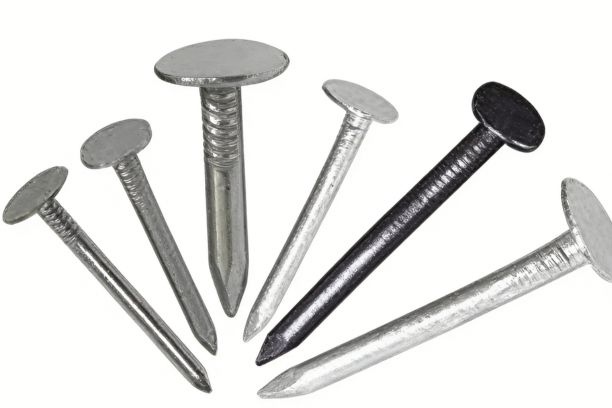 In most markets, such as the US, UK, and Australia, clout nails are commonly used in:
- Roofing sheet installation (metal or PVC)
- Timber panel fixing
- Exterior construction applications
- Situations where load distribution is critical
From our export experience, clout nails are particularly popular among roofing contractors who need a fastener that can withstand wind uplift and long-term exposure. Hot-dip galvanized clout nails, typically with a coating thickness of 40–80 microns, are often specified for outdoor use.
What Are Flet Nails?
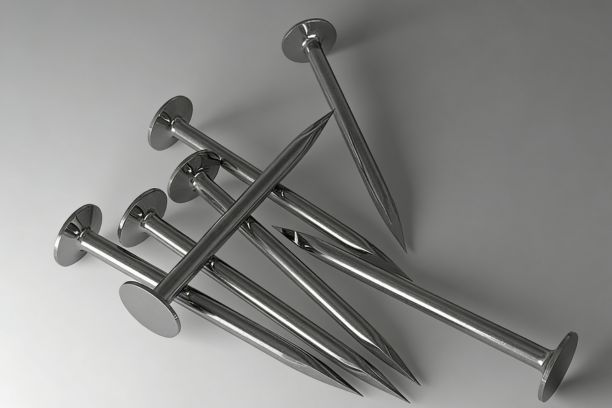
Felt nails, also known as roofing felt nails, are designed specifically for fixing underlayment materials such as roofing felt, vapor barriers, and insulation boards.
Although felt nails also feature wide heads, their structure is lighter:
- Thinner shank
- Sometimes ring or barbed design
- Optimized for soft materials
Unlike clout nails, felt nails are not intended for structural fixing. Their main purpose is to hold membranes in place without tearing them.
In large roofing projects, felt nails are typically installed at intervals of 150–300 mm, depending on wind load requirements and local building codes.
Key Differences Between Clout Nails and Felt Nails
Understanding the differences between clout nails and felt nails becomes much easier when comparing their core features side by side.
| Feature | Clout Nails | Felt Nails |
| Primary Use | Structural / sheet fixing | Roofing felt / membrane fixing |
| Head Design | Large, thick | Wide but thinner |
| Shank Thickness | Thick | Thin |
| Holding Strength | High | Moderate |
| Typical Length | 20–50 mm | 10–30 mm |
| Application Type | Load-bearing or semi-structural | Lightweight materials |
In short, clout nails are designed for strength and durability, while felt nails are intended for lightweight, non-structural applications.
Application Differences in Real Projects
In real construction scenarios, the choice between clout nails and felt nails directly affects performance.
Clout nails are commonly used for fixing roofing sheets, securing timber boards, and attaching sheet materials to wooden structures. Because clout nails have a thicker shank and stronger grip, they can resist wind uplift and mechanical stress.
 Felt nails, by contrast, are mainly used to secure roofing felt and underlayment layers. These materials are soft and can tear easily, so felt nails are designed to hold them in place without causing damage.
We have seen cases in export markets where buyers mistakenly used felt nails instead of clout nails for metal sheet fixing. In high-wind areas, this resulted in pull-through failure within months, leading to expensive repairs. This highlights why selecting the correct type of clout nails is critical for structural applications.
Material and Corrosion Resistance
Both clout nails and felt nails are used in outdoor environments, but their exposure conditions differ.
Clout nails are often exposed to weather, making corrosion resistance essential. Common materials include:
1.Hot-dip galvanized steel (40–80 μm coating)
2.Stainless steel for coastal regions
3.Aluminum for lightweight applications
Felt nails are usually covered by roofing layers, so their exposure is limited. Standard galvanized coatings are generally sufficient for most applications.
However, in coastal or high-humidity regions, using stainless steel clout nails significantly improves durability and reduces maintenance costs over time.
Head Design and Load Distribution
One of the most important advantages of clout nails is their load distribution capability.
The large, thick head of clout nails spreads force over a wider area, reducing the risk of material damage. This is especially important when fixing thin sheets or panels, where concentrated force could cause cracking or pull-through.
 Felt nails also have wide heads, but they are lighter and not designed for load-bearing applications. Their function is simply to keep soft materials in place.
This difference explains why clout nails are widely used in structural and exterior applications, while felt nails remain limited to underlayment installation.
Cost and Market Preferences
From a purchasing perspective, there is also a clear difference between clout nails and felt nails.
Felt nails are generally cheaper due to their smaller size and lower material usage. They are typically sold in large quantities for roofing projects.
Clout nails, especially hot-dip galvanized or stainless steel versions, are more expensive. However, their higher strength and durability make them more cost-effective in the long run for demanding applications.
In major markets:
Clout nails are widely used in construction and exterior fixing.
Felt nails dominate roofing underlayment installation.
Understanding this distinction helps distributors and importers optimize their product range.
How to Choose the Right Clout Nails for Your Project
Selecting the right fastener depends on the application, material, and environmental conditions.
If your project involves fixing roofing sheets, timber panels, or exterior materials, clout nails are the correct choice. Their strength, durability, and corrosion resistance ensure long-term performance.
 If the application involves roofing felt, membranes, or insulation, felt nails are more suitable due to their lightweight design.
In our experience working with international buyers, choosing the correct type of clout nails at the beginning of a project can reduce failure rates and significantly improve installation efficiency.
Conclusion: Choosing the Right Fastener Matters
The difference between clout nails and felt nails is not just technical—it directly impacts the quality and durability of your project. Clout nails are designed for strength and long-term performance, while felt nails are optimized for lightweight materials and ease of installation.
At MTZ, we specialize in manufacturing high-quality clout nails for global markets. With strict quality control, consistent galvanization standards, and reliable mechanical performance, our clout nails meet the demands of construction professionals worldwide.
We currently supply clout nails to customers across North America, Europe, and Southeast Asia, with stable production capacity and fast delivery times—typically within 15–25 days depending on order volume.
If you are looking for a dependable supplier of clout nails with both quality assurance and efficient logistics, MTZ is ready to support your business.
Phone NUMBER: 0086-15332109165