How to Prevent Rust in Bulk Steel Nail Shipments: A Sourcing Manager’s Checklist
You’ve negotiated the wholesale steel nail price, signed the contract, and the container is on its way. Three weeks later, your customer sends photos: rusted nails, rejected shipment, claim pending.
In many export claims, the nails themselves may meet the agreed specification—the failure occurs in moisture control and packaging during transit. Packaging is often the weakest link between the factory floor and the destination port.
Steel nails are highly susceptible to rust when exposed to moisture and oxygen during ocean transport. Condensation occurs when warm, humid air inside a shipping container cools below its dew point. When this happens repeatedly during a voyage—particularly across changing climate zones—surface corrosion can begin.
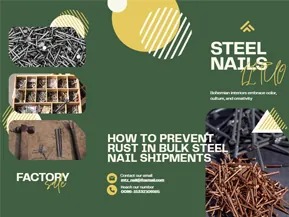
Preventing rust in bulk steel nail shipments starts at the factory floor, not the destination port. This checklist is written from the factory floor—where the nails are made, packed, and sealed before they hit the ocean.
Here’s what we check on every bulk order before the container door closes.
Start with the Right Nail Coating
If you’re buying bright (uncoated) steel nails for export, you’re already fighting an uphill battle. Bright nails have no corrosion protection beyond the packaging.
What to specify in your RFQ:
-
Hot-dipped galvanized (HDG): Thick zinc coating, suitable for outdoor and high-humidity shipments. Typical coating thickness varies depending on nail size and applicable galvanizing standards.
-
Electro-galvanized: Thinner coating. Better than bright, but still vulnerable in long ocean transits.
-
Black phosphate/oil: Provides short-term protection for indoor storage, not recommended for sea freight.
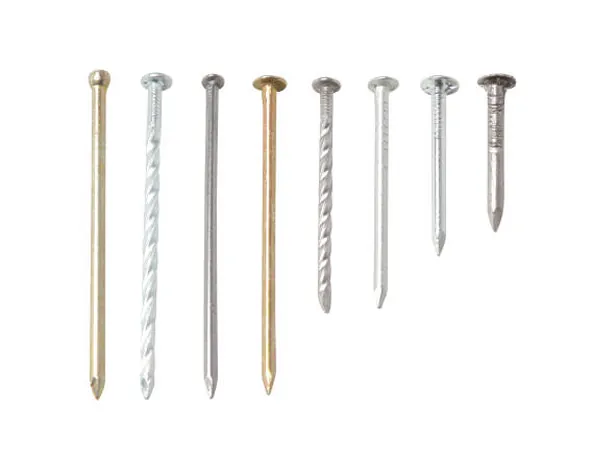 For long ocean transits and high-humidity conditions, hot-dipped galvanized nails generally provide stronger corrosion protection than bright or electro-galvanized nails. But even galvanized steel nails can rust if the packaging is wrong. The coating protects the nail; the packaging protects the coating.
Why steel nails are particularly vulnerable: Steel nails have a large exposed surface area relative to their packaging volume. The points and heads, when tightly packed, create small crevices where moisture can become trapped and accelerate localized corrosion.
Before Packaging: Start With Dry Nails
VCI and desiccants cannot compensate for moisture already trapped inside the package. Nails should be clean and dry before packaging, especially after washing, surface treatment, or exposure to humid production environments.
Before packing, we check that the product and packaging materials are dry. If moisture is sealed inside the package, corrosion can begin even when VCI and desiccants are used.
VCI Packaging: Your First Line of Defense
VCI (Vapor Corrosion Inhibitor) packaging is the industry standard for rust prevention in metal shipments. VCI paper or film releases corrosion-inhibiting molecules that form a protective layer on the metal surface, helping reduce corrosion during storage and transport.
VCI is a preventive system, not a cure for existing corrosion or excessive moisture. If nails are packed wet or the packaging is damaged during transit, VCI protection alone may not prevent rust.
What VCI does:
-
Protects ferrous metals (steel, iron, cast iron) during storage and transport
-
Reaches tight spaces where oil or grease can’t penetrate
-
Can provide corrosion protection for extended storage and transport periods when properly selected, applied, and enclosed
-
Works even after brief opening, such as during customs inspection
 VCI packaging options for bulk nails:
| Packaging Type | Best For | Key Feature |
|---|---|---|
| VCI Paper | Carton liners, interleaving between layers | Kraft paper impregnated with VCI chemistry |
| VCI Film | Full sealing, shrink wrapping, export containers | Polyethylene film with VCI; heat-shrinkable options available |
| VCI Bags | Individual cartons or smaller bulk units | Pre-formed bags with VCI protection |
The rule: VCI works most effectively when the packaging creates an enclosed space that allows the protective vapor to remain around the nails. Simply placing VCI paper inside an open carton may not provide reliable protection for a long ocean transit. Depending on the VCI formulation, packaging design, and storage conditions, protection periods may range from several months to a year or longer.
Desiccants and Moisture Barriers
Rust prevention should be treated as a packaging system—not a single material. For example, VCI paper alone cannot compensate for a wet carton, and desiccants alone cannot protect products if moisture continues to enter through a poorly sealed package.
VCI provides vapor-phase corrosion protection, while desiccants absorb moisture and help control humidity inside the sealed package.
For long ocean routes involving significant temperature and humidity changes, condensation inside the container can become a major rust risk.
What we specify:
-
Silica gel or clay desiccant bags placed inside sealed VCI packaging
-
Moisture barrier film (aluminum or metallized) between the VCI layer and the outer carton
-
VCI films with enhanced moisture-barrier properties can reduce water-vapor transmission compared with standard packaging films
Desiccant quantity should not be chosen by carton weight alone. Package volume, moisture-barrier performance, transit duration, and expected temperature and humidity conditions all affect the required amount.
Sealing: The Most Overlooked Step
A properly sealed package provides a more controlled protective environment. Simply closing a carton does not provide the same level of moisture and VCI protection.
This is where we see the most failures. A carton with VCI paper inside and the flaps folded shut is not sealed. The protective VCI environment may not be maintained effectively, while moisture can enter through gaps in the packaging.
 What we check:
-
VCI bags are heat-sealed or tape-sealed—not just folded
-
VCI film is shrink-wrapped and sealed on all sides
-
Inner cartons are sealed before going into outer cartons
-
Outer cartons are sealed with tape—no gaps
For container packing:
-
Pallet loads should be securely stretch-wrapped on all sides and the top to reduce direct exposure to humid air and protect cartons from moisture during transit
Pallet and Container Prep
The container itself can be a source of moisture. Wooden pallets and container floors can retain moisture, and if cargo or packaging materials are loaded while damp, that moisture may remain inside the container throughout the voyage.
What we verify:
-
Pallets are dry before loading
-
Container floor is dry and clean
-
A plastic moisture barrier may be placed between the pallet and the container floor to reduce direct moisture transfer from the floor
Before loading, our QC team checks:
-
Container roof, walls, and floor for water stains, visible leaks, or condensation
-
Pallets confirmed dry
-
Packaging checked for complete sealing
-
Desiccants added according to package size and transit conditions
-
Loading photos recorded for shipment records
What to Ask Your Supplier
As a sourcing manager, you don’t need to become a packaging engineer. But you do need to ask the right questions.
| Question | Why It Matters |
|---|---|
| “What VCI product do you use?” | VCI formulations vary; ferrous-specific VCI is required for steel nails |
| “Is the VCI packaging sealed or just folded?” | A proper enclosed space is needed for VCI to work effectively |
| “What desiccant do you use, and how much?” | Quantity depends on package volume and transit duration |
| “How do you palletize and wrap?” | Pallet protection affects exposure to moisture during transport |
| “Do you have a written packaging procedure?” | A documented process improves consistency |
| “Can you provide photos of the sealed packages before container loading?” | Visual confirmation helps verify packaging and loading conditions |
Red Flags to Watch for Before Shipment
-
The supplier cannot explain what type of VCI material is used
-
Desiccant quantity is chosen without considering package volume or transit conditions
-
Cartons are packed immediately after wet surface treatment
-
VCI paper is placed inside cartons without an enclosed protective package
-
The container is loaded without checking for leaks or moisture
-
No packaging or loading photos are available before shipment
If you see any of these red flags, the shipment is at higher risk—and you should verify packaging and sealing before the container leaves the factory.
Example Packaging Requirements for a Purchase Specification
The following example can be used as a starting point when discussing export packaging requirements with a nail supplier:
-
Nails must be clean and dry before packing
-
VCI materials must be suitable for ferrous metals
-
Desiccant quantity must be determined according to package volume and expected transit conditions
-
Inner protective packaging must be properly enclosed
-
Pallet loads should be securely stretch-wrapped
-
Containers must be inspected for visible moisture or leakage before loading
-
Packaging and loading photos should be provided before shipment
The exact packaging specification should be adjusted according to the nail coating, destination climate, transit duration, and transport route.
The Bottom Line
Preventing rust in bulk steel nail shipments isn’t complicated—but it requires attention to every layer of the packaging system.
The checklist:
-
Specify the right coating for the transit route and destination climate
-
Ensure nails are clean and dry before packaging
-
Use VCI packaging (paper or film) with ferrous-specific chemistry
-
Add desiccants inside sealed packages to control humidity
-
Seal everything—VCI bags, inner cartons, outer pallets
-
Protect the pallet with stretch wrap and a vapor barrier on the container floor
-
Ask your supplier the right questions and verify before the container door closes
 The nail price matters, but the cost of a rusted shipment can extend far beyond the packaging itself—through rejected goods, project delays, additional handling, and customer claims.
When sourcing export nails, include packaging requirements in the purchase specification—not only the nail size, coating, and quantity. For projects requiring export-oriented rust protection, packaging specifications can be discussed before production.
MTZ — professional nail manufacturer. Hot-dipped galvanized, electro-galvanized, and bright nails. Custom packaging available with VCI protection for export shipments.